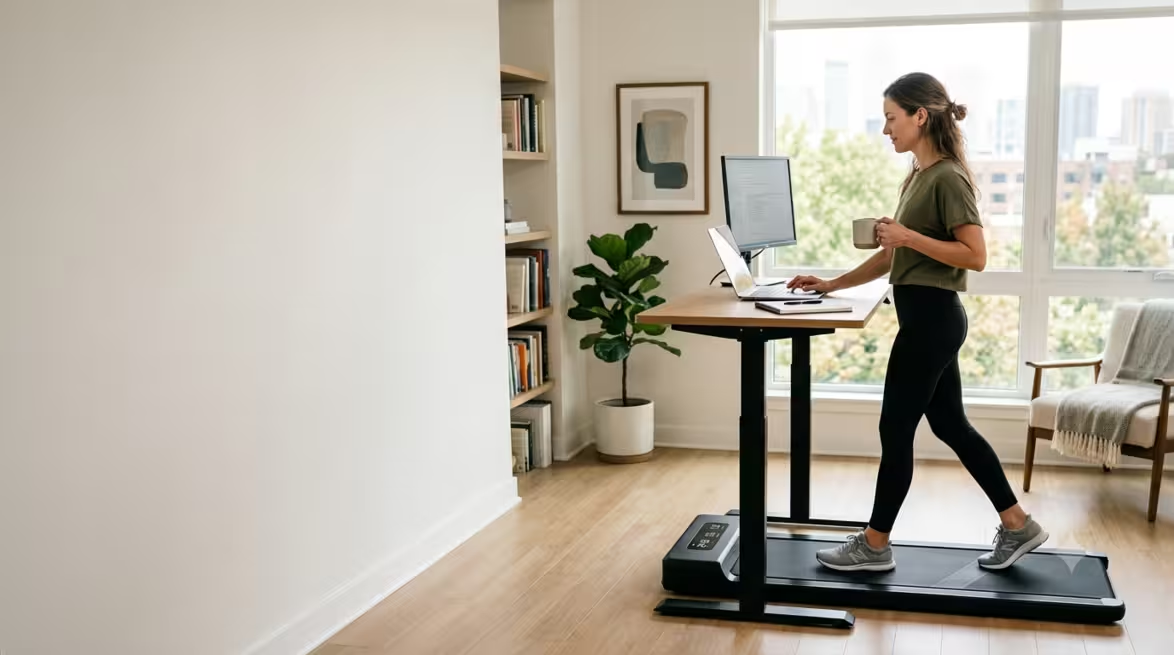
If you spend most of your day sitting at a desk, you’ve probably had the same thought I had: I need to move more, but where am I supposed to find the time? that’s what made me interested in walking pads. i wasn’t looking for a machine that would turn my living room into a gym. I wanted something I could use for short walks during the day, especially when I’m working from home. but then I started wondering how long I should actually walk on it.
20 minutes? 30 minutes? An hour?
After researching walking routines and thinking about how a walking pad would realistically fit into a normal workday, I came to a pretty simple conclusion: you don’t need to start with a long workout. for most people, starting with 10–20 minutes and gradually working toward 30 minutes can be a much more realistic approach.
Here’s how I’d approach it.
So, How Long Should You Walk on a Walking Pad?
There isn’t one perfect number for everyone. if you’re completely new to regular walking, 10–20 minutes a day is a reasonable place to start. Once you’re comfortable, you can gradually increase the time. for someone who already walks regularly, 30–60 minutes of total walking throughout the day may be easier to handle. the important word here is total.
You don’t have to stand on your walking pad for an uninterrupted hour. you could walk for 10 minutes before work, another 10 minutes during lunch, and another 10–15 minutes in the afternoon. suddenly, you’ve accumulated 30–35 minutes without having to find one large block of free time.
Why I Prefer Short Walking Sessions
When I first thought about using a walking pad, I imagined putting aside a full hour every day. the more I thought about my schedule, the less realistic that sounded. there are always emails, work, meals and other things competing for that time. short sessions make much more sense.
If I have 10 minutes available, I can walk for 10 minutes. I don’t have to wait until I have a completely free hour. that small difference can make a walking pad much easier to actually use. and that’s probably the biggest reason I like the concept: it removes some of the excuses that normally get in the way of walking.
Is 30 Minutes on a Walking Pad Enough?
For me, 30 minutes feels like a very practical target. it’s long enough to add some movement to a desk-heavy day, but it doesn’t feel overwhelming. and you can split it up. a simple routine could be:
10 minutes in the morning
10 minutes during a work break
10 minutes in the evening
That’s it. you could also do one continuous 30-minute walk if you prefer. there isn’t a rule that says one method is better for everyone.
What About Walking for an Hour?
If you’re already comfortable with walking, an hour on a walking pad doesn’t necessarily sound unreasonable. but I wouldn’t start there. I’d rather build up gradually:
10–15 minutes → 20 minutes → 30 minutes → 40 minutes → 45–60 minutes
If a particular duration feels comfortable, stay there for a while. there’s no prize for reaching an hour as quickly as possible. the idea is to create a routine that you can continue for months, not something you do enthusiastically for five days and then abandon.
What Does the Research Say About Daily Activity?
This is where it’s useful to look beyond walking-pad marketing. the U.S. Department of Health and Human Services recommends that adults aim for 150–300 minutes of moderate-intensity physical activity per week, along with muscle-strengthening activities on at least two days per week.
For people who aren’t very active, the guidelines also emphasize that starting with smaller amounts of activity is still worthwhile. so you don’t need to think of your walking pad as an all-or-nothing exercise machine. even if you’re starting with short sessions, you’re building more movement into your day.
Can You Walk on a Walking Pad While Working?
This is one of the main reasons I would consider buying one. a walking pad can be particularly useful for people who work from home. i wouldn’t try to walk quickly while doing complicated work, though. for emails, listening to a meeting, watching a presentation or doing another relatively simple task, a comfortable walking pace may work better.
There’s definitely an adjustment period. walking and typing at the same time isn’t something everyone finds natural immediately. I’d start slowly and see how it feels.
What Speed Should You Use?
The right walking-pad speed depends on what you’re doing. if you’re working, I’d keep the speed comfortable enough that you can safely maintain your balance and concentrate. if you’re doing a dedicated walking session, you can choose a faster pace if it feels comfortable. i wouldn’t worry too much about finding the “perfect” speed. the walking pad is supposed to make movement easier, not turn every session into a race.
The Walking Pad I’m Considering
While researching different models for a compact home setup, I came across the OGPOU Portable Treadmill with Incline. what caught my attention was that it isn’t limited to slow under-desk walking. The current listing advertises a 0.6–7.6 MPH speed range, a 3.0 HP motor, a 350-lb listed weight capacity, and an incline function.
That combination makes it interesting for someone who wants one machine that can be used for different types of walking. the compact design is another reason it caught my attention, particularly if you don’t have a dedicated exercise room. if you want to check the current specifications and price, you can see the OGPOU Walking Pad on Amazon.
Just keep in mind that Amazon prices, availability and product specifications can change, so I’d check the listing before making a purchase.
How I’d Build a Walking Pad Routine
If I were starting from scratch, I’d keep things very simple.
Week 1: 10–15 Minutes
The goal would simply be getting comfortable with the machine and making walking part of the day.
Week 2: 15–20 Minutes
If the first week feels easy, I’d add a few minutes.
Week 3: 20–30 Minutes
At this point, I’d try to make walking a regular part of my workday.
After That: Adjust Based on Your Routine
If 30 minutes feels good, stay there. if you want more movement, gradually add another 5–10 minutes. there’s no reason to increase the duration just because you think you “should.”
A Simple Workday Walking Schedule
Here’s the type of routine I’d actually find realistic:
Before starting work: 10 minutes
Lunch break: 10–15 minutes
Afternoon break: 10 minutes
Evening: Optional 10–20 minutes
That gives you flexibility.
On a busy day, I could stop after 20–30 minutes. on a quieter day, I could walk longer. that’s much more appealing to me than having a strict one-hour workout that I have to complete every day.
Can Walking on a Walking Pad Help With Weight Loss?
A walking pad can help you become more active, but I wouldn’t look at it as a magic weight-loss machine. weight change depends on your overall energy intake and expenditure, along with other individual factors. what I like about a walking pad is that it can make additional daily movement more convenient.
If you normally spend hours sitting and the walking pad helps you spend part of that time walking, you’ve changed your activity pattern. that’s useful—but it works best as part of an overall healthy lifestyle.
5 Things I’d Keep in Mind
Start slowly. Don’t jump straight into a long session if you’re not used to walking.
Don’t obsess over steps. A step goal can be useful, but consistency matters too.
Keep the speed comfortable. Especially when you’re working.
Use short sessions. Ten minutes is better than waiting for a free hour that never appears.
Listen to your body. If something causes pain or feels unusual, stop and reassess.
After looking into walking pads, I’ve realized that the question probably shouldn’t be “How long do I need to walk?” a better question is:“How much walking can I realistically fit into my normal day?” for a beginner, I’d start around 10–20 minutes.
Once that feels comfortable, 20–30 minutes is a very reasonable next step. From there, you can gradually increase your total walking time if you want to. and you don’t have to do it all in one go.
That’s the part of walking pads I find most appealing. Ten minutes here and another 10 minutes there can turn into a surprisingly active day without requiring a major change to your schedule. if you’re also looking for a walking pad for a small home office, the OGPOU Portable Treadmill with Incline is one model I’d compare based on its current specifications and price.
Check the OGPOU Walking Pad on Amazon →
Disclosure: This article contains affiliate links. If you purchase through a link on this page, I may earn a commission at no additional cost to you.
Frequently Asked Questions
How long should a beginner walk on a walking pad?
Starting with 10–20 minutes can be a practical approach. Increase gradually as you become comfortable.
Is 30 minutes on a walking pad enough?
Thirty minutes can be a realistic daily target, particularly for someone trying to add more movement to a desk-based routine.
Can I use a walking pad every day?
Walking can be incorporated into many people’s daily routines, but the right amount depends on your current fitness, activity level and individual circumstances.
Can I walk on a walking pad while working?
Yes, if the speed and task are appropriate and you can safely control the machine. Start slowly before trying to combine walking with work.
Is an incline walking pad worth it?
If you want the flexibility to make walking more challenging without relying only on speed, an incline feature can be useful.
One thought on “How Long Should You Walk on a Walking Pad to See Results?”
Comments are closed.