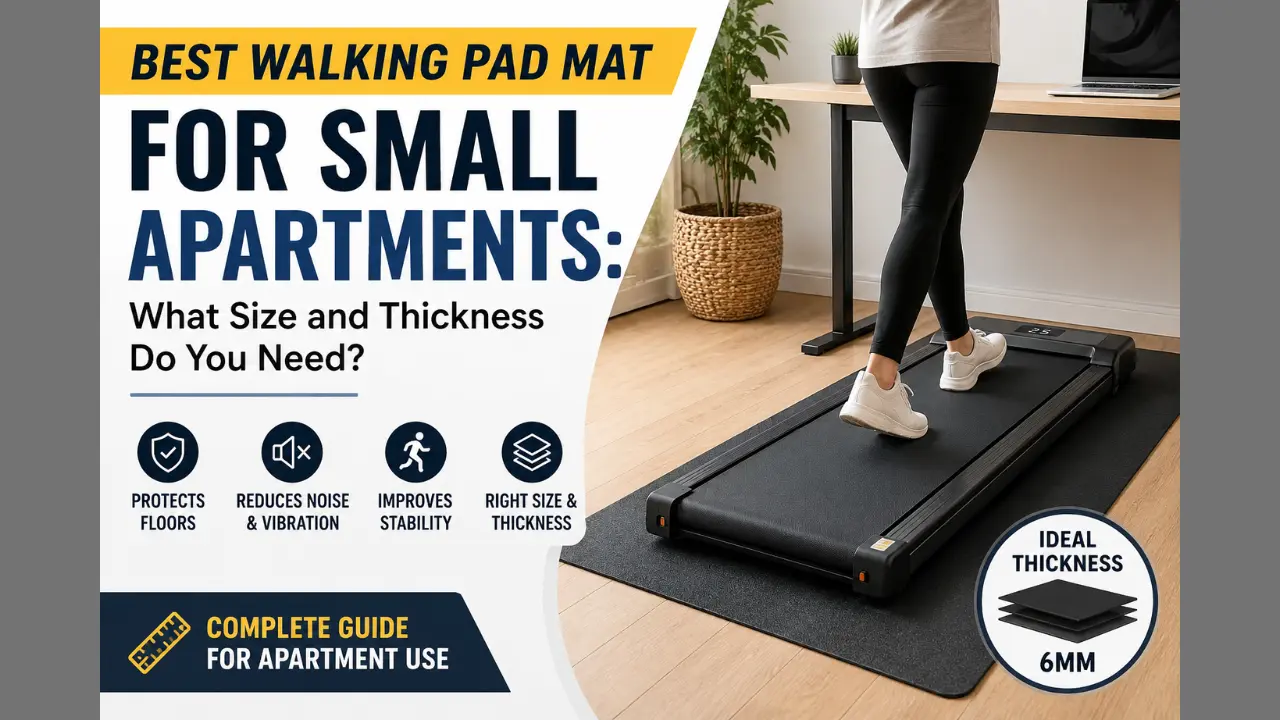
If you live in a small apartment, choosing a walking pad is only half the decision. the other half is figuring out what to put underneath it.
I learned that a walking pad mat is easy to overlook when you’re focused on finding the right walking pad. But once you start thinking about hardwood floors, carpet, vibration, noise, and limited apartment space, the mat suddenly becomes much more important. the good news is that you don’t necessarily need a huge gym mat.
For a small apartment, the goal is to find a walking pad mat that is large enough to cover your equipment, thick enough to provide useful cushioning, and compact enough that it doesn’t take over your room. in this guide, I’ll explain what size and thickness to look for and compare two options worth considering.
What Size Walking Pad Mat Do You Need?
For most compact walking pads, a mat around 24–30 inches wide and 60–72 inches long can be a practical starting point. however, don’t buy based on those numbers alone. the mat should be large enough to sit underneath the walking pad with some coverage around the equipment. Always measure your walking pad first and compare those measurements with the mat’s actual dimensions.
For thickness, around 1/4 inch (6mm) is a useful range to consider for apartment use because it provides a layer between your equipment and the floor without becoming excessively bulky.
Why Use a Mat Under a Walking Pad?
A walking pad may look harmless on your floor, but you’re dealing with a moving machine that produces weight, movement, and vibration. a suitable mat can help create a barrier between the equipment and your flooring. the main reasons to use one are:
- Protecting hardwood and other flooring surfaces
- Helping reduce vibration
- Helping reduce some equipment noise
- Keeping the walking pad more stable
- Making cleaning around the equipment easier
- Creating a dedicated workout area
A mat won’t magically make a walking pad silent. Footsteps and building construction still matter, particularly in apartments.but it can be a simple extra layer of protection.
What Size Walking Pad Mat Is Best for a Small Apartment?
This is where I would be careful. a larger mat isn’t automatically better. if your apartment has limited floor space, buying an oversized treadmill mat can actually make your walking setup more difficult to live with. instead, start with the dimensions of your walking pad.
Step 1: Measure Your Walking Pad
Measure:
Length × Width
Then compare those numbers with the mat.
Ideally, the mat should provide coverage beyond the footprint of the equipment rather than being exactly the same size.
Step 2: Think About Your Room
Measure the area where you plan to use the walking pad.
Don’t forget to consider:
- Furniture
- Door clearance
- Walking space
- Electrical outlets
- Storage space
- Nearby walls
A mat that technically fits underneath your walking pad may still make the room feel cramped.
Step 3: Consider Storage
This is particularly important in a small apartment. if you plan to move your walking pad after every workout, think about where the mat will go too. a compact setup should be easy to manage.
What Thickness Should a Walking Pad Mat Be?
Thickness is another area where people can overthink the purchase. for a compact walking pad, you don’t necessarily need an extremely thick commercial gym floor. a1/4-inch (approximately 6mm) mat is a practical thickness to consider for many home setups. the right thickness depends on:
- Your flooring
- The weight of the walking pad
- Your body weight
- How frequently you use the machine
- How much vibration you’re trying to reduce
- Whether you’re using it on hardwood or carpet
Is Thicker Always Better?
Not necessarily. a thicker mat may provide more cushioning, but it can also be heavier, bulkier, and more difficult to store. for a small apartment, I’d prioritize the combination of:
Correct size + suitable thickness + non-slip surface
rather than simply buying the thickest mat available.
Best Walking Pad Mat for Hardwood Floors
Hardwood flooring is one of the main reasons people look for an exercise mat. a mat creates a protective layer between the walking pad and the floor and can help reduce direct contact from the equipment. for hardwood, I’d look for:
- Non-slip construction
- Adequate thickness
- A size larger than the walking pad footprint
- A surface that’s easy to clean
- Material suitable for indoor exercise equipment
Also make sure the floor underneath is clean and dry before placing the mat. dust or small particles trapped underneath can potentially cause problems over time.
Best Walking Pad Mat for Carpet
Carpet creates a slightly different situation. the mat can provide a more stable surface between the carpet and the equipment while also helping prevent sweat, dirt, and equipment contact from reaching the carpet. however, carpet thickness varies considerably. a thick, soft carpet can behave differently from low-pile carpet, so check the walking pad manufacturer’s recommendations before placing it on carpet.
Amazon Basics Treadmill Mat: A Good Apartment Option?
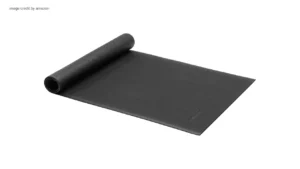
One option worth considering is the Amazon Basics Treadmill Mat and Exercise Equipment Floor Protector. the Amazon listing currently shows a 72 × 30 × 0.3-inch mat made from high-density PVC. Amazon describes it as suitable for treadmills and other exercise equipment, with a non-slip surface and a design intended to help reduce noise and vibration.
Check the Amazon Basics Treadmill Mat on Amazon
Why I Like the Size
The 72-inch length gives you plenty of coverage for many compact walking setups. the 30-inch width is also worth noting. if your walking pad is substantially narrower than that, you’ll have some extra mat area around the equipment. for a small apartment, however, you should still measure your available floor space before buying.
What About Thickness?
At 0.3 inches, the Amazon Basics mat is roughly 7.6mm thick. that’s slightly thicker than a 6mm mat, making it an interesting option if you want a little more cushioning without moving into an extremely thick gym-flooring product.
GymCope Treadmill Mat: Another Option
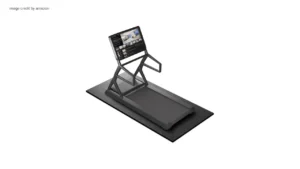
The second product worth looking at is the GymCope Treadmill Mat. the Amazon listing associated with the link you provided describes it as a 6mm-thick exercise equipment mat and offers multiple size options. The listing indicates compatibility with treadmills and other equipment, while the product information also mentions walking pads.
Check the GymCope Treadmill Mat on Amazon
Why It Could Work Well in an Apartment
The biggest advantage here is size flexibility. the product is listed in multiple dimensions, ranging from smaller options to larger treadmill-sized versions. That gives apartment users more opportunity to choose a mat based on their actual equipment rather than automatically buying the largest size. the 6mm thickness is also right around the range I would consider practical for a compact walking-pad setup.
Amazon Basics vs. GymCope: Which Is Better?
| Feature | Amazon Basics | GymCope |
|---|---|---|
| Material | High-density PVC | PVC |
| Thickness | 0.3 inch | 6mm |
| Example size | 72 × 30 inches | Multiple sizes |
| Walking pad use | Suitable depending on fit | Listed for walking pads |
| Apartment use | Good if space allows | Flexible size options |
| Storage | Considerable at 72 × 30 | Depends on selected size |
| Best for | Larger compact setups | Users wanting size choices |
Neither product is automatically the winner for every apartment. if you want a simple, larger mat, Amazon Basics is worth considering. if you want more flexibility in dimensions, GymCope may make more sense. the better choice is the one that fits your walking pad and available floor space.
What I Would Look for Before Buying a Walking Pad Mat
If I were setting up a walking pad in a small apartment, I wouldn’t start with the brand. I’d start with measurements.
1. Measure the Walking Pad
Write down the exact length and width.
2. Measure Your Floor
Make sure the mat won’t interfere with nearby furniture.
3. Choose the Thickness
Around 6mm can be a practical starting point for many home setups.
4. Check the Material
PVC is common for treadmill and exercise equipment mats because it is durable and relatively easy to clean.
5. Look for a Non-Slip Surface
You don’t want the walking pad gradually shifting during use.
6. Think About Noise
A mat can help with vibration and floor contact, but don’t expect it to eliminate all walking noise.
7. Consider Storage
This is easy to forget until the first time you need to move everything.
How to Reduce Walking Pad Noise in an Apartment
A mat is only one part of the solution. if you’re living upstairs or sharing walls with neighbors, consider the entire setup.
Use a Suitable Mat
A dense exercise mat can help separate the machine from the floor.
Walk Instead of Run
Walking generally produces less impact than running.
Keep the Walking Pad Maintained
Follow the manufacturer’s instructions for belt maintenance and cleaning.
Check the Floor
A level, stable surface can make the setup feel better.
Use Appropriate Shoes
Your footsteps can contribute significantly to the overall noise.
Be Considerate About Timing
Even a relatively quiet machine can become annoying to neighbors if it’s used very early in the morning or late at night.
Do You Need a Walking Pad Mat on Hardwood?
I would recommend considering one. it’s not just about noise. a mat can provide a protective layer between your equipment and the floor while giving you a defined place to keep the walking pad. for expensive hardwood flooring, that extra layer can be a relatively inexpensive precaution. just make sure the mat is compatible with your flooring and that moisture doesn’t become trapped underneath it.
read also :OGPOU Portable Treadmill Review: Is This Compact Walking Pad Worth Buying?
My Recommendation for a Small Apartment
If your walking pad is relatively compact, I would start by looking for a mat around 24–30 inches wide and 60–72 inches long, then adjust based on the actual dimensions of your machine. for thickness, approximately 6mm to 8mm is a sensible range to investigate for a typical apartment walking setup. the Amazon Basics 72 × 30 × 0.3-inch mat is a straightforward option if that footprint works in your room. the GymCope option is interesting if you want to choose from different sizes and prefer a 6mm-thick mat. i wouldn’t buy either one blindly.
Measure first. Buy second.
That simple step can save you from ending up with a mat that dominates the room. the best walking pad mat for a small apartment isn’t necessarily the thickest or most expensive one. it’s the one that fits your walking pad, protects your floor, provides enough cushioning, stays reasonably stable, and doesn’t make your limited living space feel even smaller.
For most apartment users, a mat around 6–8mm thick with enough length and width to extend beyond the walking pad is a practical place to start. if you’re choosing between the two products discussed here, compare the actual dimensions of your walking pad with the available mat sizes before making the final decision. that measurement matters more than the product name.
Frequently Asked Questions
What size mat is best for a walking pad?
A mat around 24–30 inches wide and 60–72 inches long can work well for many compact walking pads, but you should always compare the mat dimensions with your specific walking pad.
Is 6mm thick enough for a walking pad?
For many home walking-pad setups, 6mm can be a practical thickness. Your flooring, equipment weight, and desired vibration protection should also be considered.
Should I put a walking pad mat on hardwood?
A suitable mat can help create a protective layer between the walking pad and hardwood flooring and may also help with vibration.
Does a treadmill mat reduce noise?
It can help reduce some vibration and floor-contact noise, but it will not eliminate motor noise or the sound of footsteps.
Is a treadmill mat necessary for a walking pad?
Not always, but it can be worthwhile for floor protection, stability, cleanliness, and vibration management—especially in apartments.
Can I use a treadmill mat on carpet?
Some mats are designed for use on carpet, but compatibility depends on the walking pad, carpet type, and mat design. Check the equipment manufacturer’s recommendations before setting up.